
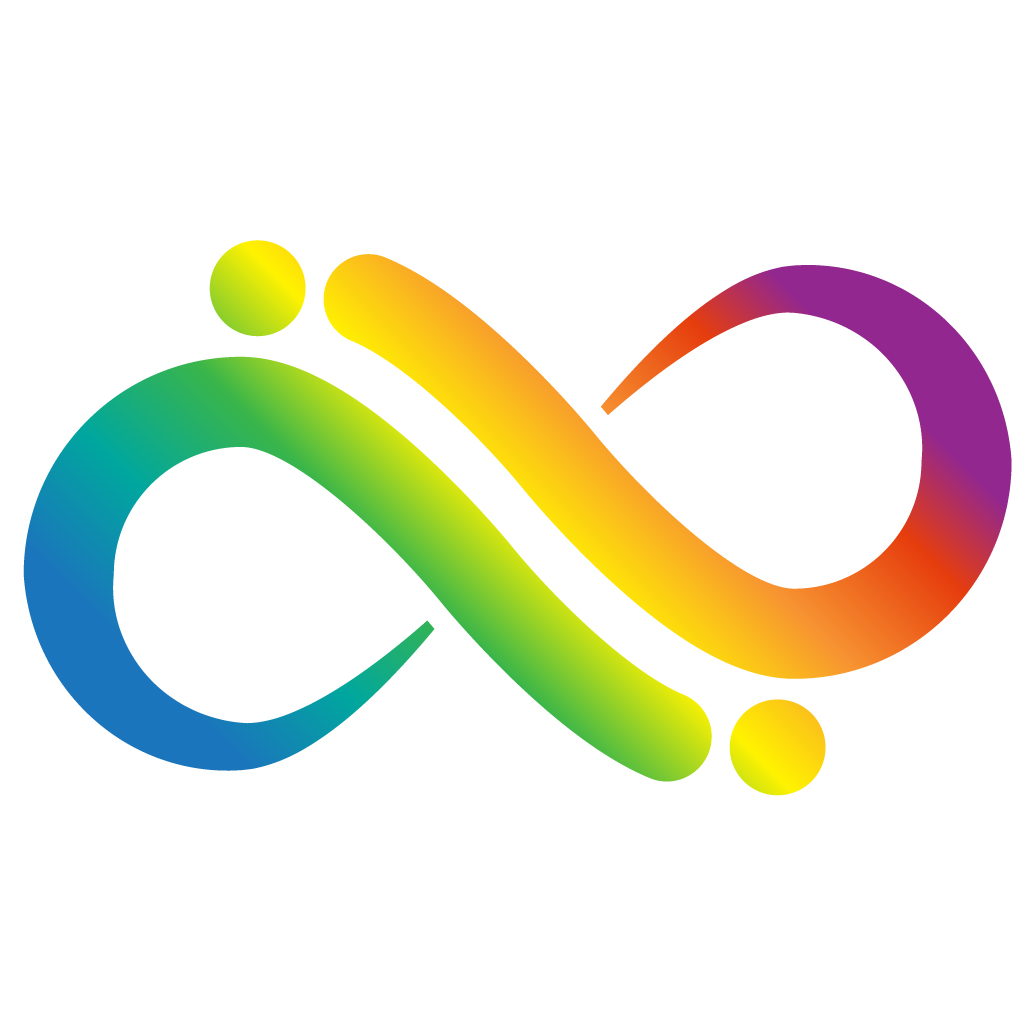
The Tri-Yin Relational Model shows how relationships are built, moment by moment, through awareness. It is grounded in Constructed Development Theory (CDT) and uses the Question Everything infinity symbol as its centrepiece.
The symbol represents two people — two mirrored question marks forming an infinity loop. This reflects a simple but powerful truth: all relationships are ongoing constructions. They are created through:
- How we construct ourselves
- How we construct the other
- How we co-create the space between us
These three elements form the core of the Tri-Yin model: Self → Other → Relational Field.
Most people think in dualities: me vs you, my view vs your view. Higher awareness adds the third dimension: the shared field between two people.
The Infinity Loop of Relating
The infinity shape encodes continuous flow. Every interaction follows a loop:
- Intention — how you construct yourself
- Awareness — how you interpret the other
- Choice — what you co-create in the relationship
- Response — what emerges from this interaction
This loop repeats continuously. Better awareness leads to better interactions, and better interactions lead to better outcomes — in couples, teams, leadership, and organisations.
- Self — your inner stance, intentions, narratives and needs.
- Other — the way you read, interpret, and imagine the other person.
- Relational Field — the shared space you create together in this moment.
Deliberate relationships are not just about two people. They are about how both people shape the relational field between them.
Relational Awareness by AQ Level
The Tri-Yin model is tightly linked to the Awareness Quotient (AQ). As AQ develops, the way we relate changes:
- AQ4 — Reactivity. Relationships are about emotional need and security. It feels like
me vs you
. - AQ5 — Negotiation. Roles, expectations and reciprocity dominate. The focus is on managing agreements.
- AQ6 — Perspective-taking. Both viewpoints are recognised. The person can see their part in the dynamic.
- AQ7 — Integrity. The self is self-authored. The relationship is co-created without losing oneself.
- AQ8 — Emergence. Relationships are seen as long-term trajectories, not just moments or conflicts.
- AQ9 — Temporal co-construction. The person is aware of how each interaction shapes both lives over time.
The higher the AQ, the more someone can hold Self, Other and the Relational Field in awareness at the same time. This is what makes genuinely deliberate relationships possible.
The Tri-Yin model translates relationship into IACR: Intention constructs the self-position, Awareness interprets the other, Choice shapes the shared relational field, and Response becomes the lived interaction.
From Compatibility to Conscious Co-Creation
Most relationship tools focus on compatibility: matching types, traits, styles or preferences. The Tri-Yin Relational Model takes a different approach. It starts from awareness, not personality.
When people see relationships as constructions, three important shifts occur:
- They take responsibility for how they show up, instead of blaming the other.
- They become curious about the relational field, not just their own story.
- They start to design relationships deliberately, rather than repeating old patterns.
The Question Everything symbol captures this in a single image: two humans, two question marks, one continuous loop of awareness. It is a reminder that relationships are never finished; they are always in motion, always under construction, and always available to be made more conscious.
Closing Thought
Whether you are a coach, leader, partner or team member, the Tri-Yin Relational Model offers a practical way to see where you are relating from — and how you can move towards more deliberate, aware and developmental connection.
A relationship is not a thing two people have. It is something two people continuously construct, usually without noticing.